

The July 2026 meeting of the World Trade Organization (WTO) General Council emerged as one of the most consequential multilateral trade gatherings in recent years, reflecting both the immense challenges confronting the global economy and the enduring determination of member states to preserve the international rules-based trading system. Convened in Geneva, Switzerland on 14th–15th July 2026, the meeting followed the Fourteenth WTO Ministerial Conference (MC14) held earlier in the year in Yaoundé, Cameroon, and served as a critical platform for translating ministerial commitments into practical institutional action.
Against a backdrop of persistent geopolitical tensions, fragmented supply chains, rising protectionist measures, technological transformation, and growing demands for sustainable and inclusive economic development, representatives from the WTO’s diverse membership assembled with a shared understanding that international cooperation remains indispensable. Although significant differences continued to characterize negotiations across several policy areas, the General Council demonstrated that dialogue, consensus-building, and institutional resilience remain central pillars of the multilateral trading framework.
The meeting reaffirmed the WTO’s unique position as the world’s foremost institution governing international commerce. While numerous regional and bilateral trade agreements have expanded in recent decades, the WTO continues to provide the universal legal architecture through which members negotiate market access, settle disputes, establish common rules, and promote transparency in global trade. The July 2026 deliberations therefore carried significance well beyond Geneva, influencing governments, multinational corporations, investors, exporters, developing economies, and consumers alike.
Ngozi Okonjo-Iweala (Director-General of the World Trade Organization) delivered a comprehensive assessment of the organization’s current trajectory, urging members to pursue simultaneous progress on WTO reform alongside outstanding negotiating mandates. Rather than allowing institutional modernization to compete with substantive negotiations, she emphasized that both objectives must advance together if the organization is to remain effective in an increasingly complex global economy. Her message reflected growing international recognition that the WTO stands at a pivotal moment in its history. Established in 1995 to provide predictability and fairness in international trade, the organization has successfully overseen decades of expanding global commerce. Yet the changing nature of economic activity including digital trade, climate-related policies, advanced technologies, and evolving geopolitical realities has generated new challenges that existing institutional arrangements must address.
Throughout the General Council proceedings, delegates consistently emphasized that restoring confidence in multilateral cooperation requires more than procedural reform. It requires political commitment, mutual trust, and renewed confidence that negotiated rules can continue to serve economies at every stage of development.
Particular attention focused on strengthening the effectiveness of WTO institutions. Discussions addressed transparency, negotiating processes, institutional efficiency, and the broader reform agenda initiated by members over recent years. While differing perspectives remained evident, participants generally acknowledged that meaningful reform should reinforce and not replace the consensus-based foundations upon which the organization has operated since its creation.
Another prominent feature of the July 2026 meeting was the continued implementation of outcomes emerging from MC14. Members evaluated the progress achieved since the ministerial conference and considered practical pathways for advancing unresolved issues. Rather than viewing Yaoundé as the conclusion of negotiations, delegates regarded the ministerial outcomes as the beginning of a new phase requiring sustained technical engagement and political leadership. Developing countries and Least Developed Countries (LDCs) occupied an important place within the discussions. The General Council adopted several decisions relating to proposals advanced by the LDC Group, reinforcing the WTO’s longstanding commitment to ensuring that the benefits of international trade remain broadly shared across all levels of economic development. These measures underscored the principle that inclusive trade contributes not only to economic growth but also to poverty reduction, employment creation, technological advancement, and long-term development.
The meeting also revisited one of the most closely watched issues in global commerce which is the moratorium on customs duties on electronic transmissions. Following the inability of members to reach agreement at MC14, several delegations reiterated the importance of restoring legal certainty for digital trade. The European Union argued that a multilateral solution remains essential for preserving a predictable environment that supports innovation, investment, and cross-border digital commerce.
Digital trade has rapidly become one of the defining features of twenty-first century commerce. Cross-border data flows, electronic services, digital platforms, artificial intelligence, cloud computing, and online business models increasingly shape international economic activity. Consequently, discussions surrounding the e-commerce moratorium have evolved beyond technical customs policy into broader debates concerning digital governance, fiscal sovereignty, technological competitiveness, and economic inclusion.
Equally significant were discussions surrounding dispute settlement reform. For many members, restoring a fully functioning and credible dispute settlement mechanism remains essential to maintaining confidence in WTO rules. Effective dispute resolution ensures that commitments negotiated among members can be enforced through impartial legal procedures rather than unilateral economic measures or political confrontation. Although consensus has yet to be achieved on every aspect of reform, the July 2026 meeting demonstrated continued political momentum towards strengthening this cornerstone of the multilateral trading system.
Agriculture likewise remained central to negotiations. Food security, agricultural subsidies, domestic support measures, and market access continue to generate differing priorities among developed, developing, and least-developed members. Delegates acknowledged that agriculture represents not merely an economic issue but also one closely connected to livelihoods, rural development, environmental sustainability, and national food resilience.
Climate change increasingly influenced discussions across multiple agenda items. Members explored how trade policies can complement environmental objectives while avoiding unnecessary barriers to commerce. As governments worldwide implement carbon reduction strategies, renewable energy initiatives, and sustainability regulations, the WTO faces growing responsibility for ensuring that environmental measures remain transparent, proportionate, and consistent with international trade rules.
The General Council also considered the implications of rapidly evolving geopolitical dynamics. Recent years have witnessed heightened trade tensions, expanded industrial policy initiatives, strategic competition among major economies, and increased use of trade measures justified on national security grounds. These developments have intensified debate regarding the balance between sovereign policy space and multilateral obligations.
For many developing economies, maintaining a stable, predictable, and rules-based international trading environment remains indispensable. Smaller economies generally possess fewer resources to negotiate bilateral arrangements with larger trading partners and therefore depend heavily upon multilateral disciplines that provide equal legal standing irrespective of economic size.
Business communities around the world closely monitored the outcomes of the General Council meeting. Exporters, manufacturers, logistics providers, financial institutions, and technology firms all benefit from transparent and predictable trade rules. Although the July meeting produced incremental rather than revolutionary outcomes, many observers viewed the continued commitment to dialogue itself as a positive signal amid an uncertain global economic landscape.
Director-General Ngozi Okonjo-Iweala repeatedly emphasized that progress should not be measured solely through headline agreements but also through the steady rebuilding of confidence among members. Consensus-based organizations often advance gradually, yet durable international agreements typically emerge through sustained engagement rather than rapid political compromise.
The July 2026 General Council therefore represented far more than a routine institutional meeting. It illustrated the continuing relevance of multilateral governance at a time when unilateral economic actions increasingly shape international headlines. By maintaining channels for negotiation, preserving institutional dialogue, and pursuing carefully balanced reform, WTO members demonstrated their collective determination to strengthen the organization for future generations.
While substantial challenges remain including WTO reform, dispute settlement modernization, agriculture negotiations, digital trade governance, and implementation of ministerial commitments, the meeting concluded with cautious optimism. Members acknowledged that rebuilding trust requires persistence, compromise, and shared responsibility.
Ultimately, the significance of the July 2026 General Council lies not merely in the individual decisions adopted but in its reaffirmation of an enduring principle: that international prosperity is best advanced through cooperation governed by transparent rules rather than uncertainty and confrontation. In an era marked by economic transformation and geopolitical complexity, the WTO continues to serve as an indispensable forum where nations seek common ground in pursuit of sustainable, inclusive, and predictable global trade.
The significance of the July 2026 General Council meeting extended well beyond the adoption of procedural decisions and formal statements. It reflected a broader recognition among WTO members that the international trading system has entered a period of profound transformation. Economic globalization, once characterized primarily by expanding market liberalization and increasingly integrated supply chains, is now influenced by strategic competition, technological innovation, climate considerations, public health resilience, and national security concerns. The WTO therefore finds itself navigating an environment far more complex than that which existed when the organization was established in 1995.
Throughout the meeting, delegates repeatedly emphasized that preserving the credibility of multilateral trade governance requires continuous adaptation without compromising the core principles of fairness, transparency, non-discrimination, and consensus. While reforms remain necessary to address emerging realities, members broadly agreed that the WTO’s enduring strength lies in its ability to provide a common legal framework within which economies of vastly different sizes and levels of development can negotiate on equal institutional footing.
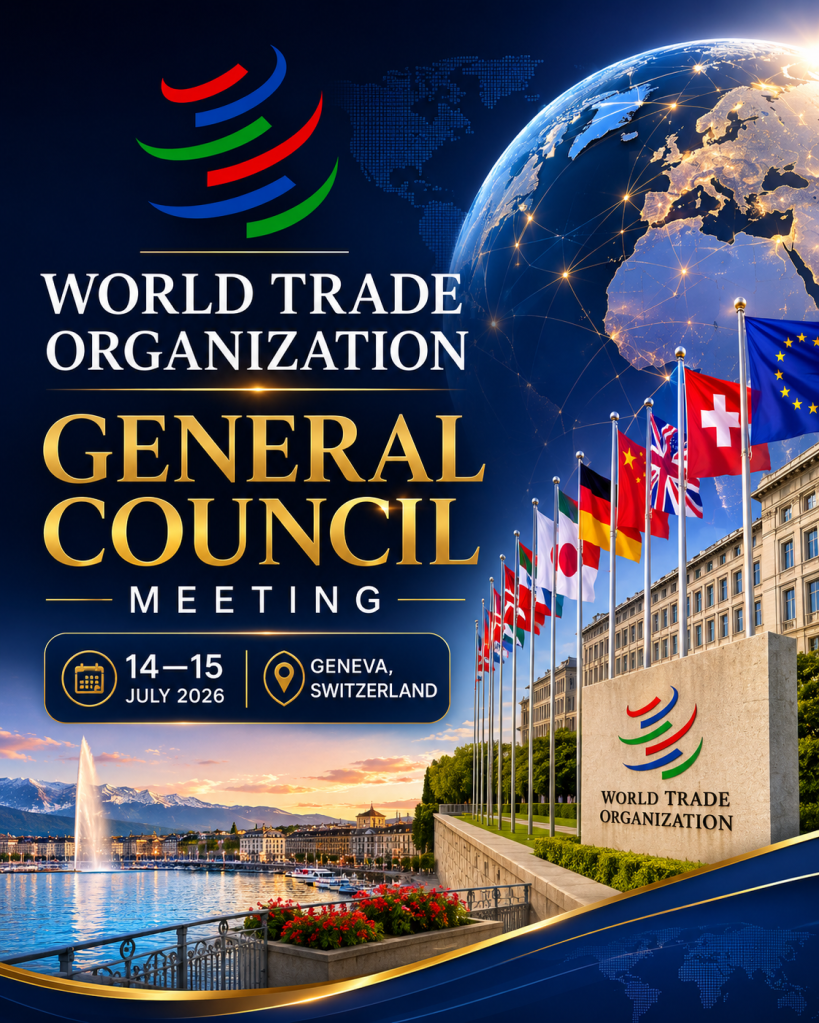
One of the defining characteristics of the July 2026 meeting was its emphasis on implementation rather than rhetoric. Instead of focusing solely on aspirational declarations, members examined practical mechanisms for advancing commitments reached at the Fourteenth Ministerial Conference. This implementation-oriented approach demonstrated a growing awareness that institutional credibility depends not only upon negotiating agreements but also upon effectively translating political commitments into measurable outcomes.
The discussions also illustrated the increasingly interconnected nature of modern trade policy. Agricultural negotiations now intersect with climate resilience and food security. Digital commerce is inseparable from questions surrounding data governance, cybersecurity, innovation, and consumer protection. Industrial policy influences investment flows, supply-chain resilience, and technological competitiveness. Environmental measures increasingly shape manufacturing, transportation, and energy markets. Consequently, the WTO’s agenda has expanded considerably beyond traditional tariff negotiations.
Developing economies consistently highlighted the importance of ensuring that future reforms remain inclusive. Many delegates argued that the multilateral trading system must continue to recognize differing development capacities while providing sufficient flexibility for poorer members to integrate more effectively into global markets. Technical assistance, capacity building, and enhanced participation in international value chains were identified as essential components of sustainable economic development.
Another recurring theme involved strengthening transparency across WTO activities. Members acknowledged that timely notification of trade measures enhances predictability, reduces misunderstandings, and promotes confidence among trading partners. Improved transparency not only facilitates dispute prevention but also contributes to a more stable international commercial environment for governments and private-sector stakeholders alike.
The General Council further underscored the importance of maintaining constructive dialogue despite political differences. While disagreements remain inevitable within an organization comprising nearly every trading economy in the world, the willingness of members to continue negotiations represents an institutional achievement in itself. The WTO remains one of the few global forums where competing economic powers engage continuously through structured legal and diplomatic processes rather than unilateral confrontation.
Private-sector observers welcomed this continued engagement. International businesses depend upon predictable trade rules when making long-term investment decisions, establishing production networks, and managing cross-border supply chains. Although companies often adapt rapidly to changing market conditions, prolonged uncertainty regarding international trade policy can discourage investment, increase operational costs, and reduce economic efficiency.
Financial markets likewise monitor WTO developments because trade policy influences global economic growth, inflation, investment flows, commodity prices, and industrial production. While General Council meetings rarely produce immediate market-moving announcements, they often shape expectations regarding future regulatory developments and international economic cooperation.
The July 2026 deliberations also reflected growing recognition that international trade increasingly serves broader societal objectives. Governments now view trade policy not only as an instrument for expanding commerce but also as a means of promoting sustainable development, technological advancement, environmental stewardship, gender inclusion, and economic resilience. This evolving perspective continues to broaden the scope of WTO discussions while reinforcing the organization’s relevance within contemporary global governance.
As the July 2026 General Council concluded, attention turned towards the substantial work that lies ahead. Members departed Geneva fully aware that many of the most difficult negotiations remain unresolved. Nevertheless, the meeting reinforced a shared understanding that effective multilateral cooperation is built through sustained engagement, gradual compromise, and long-term institutional commitment rather than through isolated diplomatic breakthroughs. Among the most significant priorities moving forward is the continued modernization of the WTO itself. Institutional reform is expected to remain at the forefront of discussions as members seek to improve negotiating efficiency, strengthen transparency, enhance committee work, and restore confidence in the organization’s dispute-settlement architecture. These reforms will be essential if the WTO is to remain responsive to rapidly evolving patterns of global commerce.
Digital trade will undoubtedly become an increasingly prominent area of negotiation. The accelerating adoption of artificial intelligence, digital payments, cloud computing, blockchain technologies, cross-border data services, and electronic commerce continues to redefine international business. Policymakers therefore face the challenge of developing rules that encourage innovation while safeguarding legitimate public policy objectives, including privacy, cybersecurity, and consumer protection.
Climate-related trade measures are likewise expected to occupy an increasingly central position within WTO discussions. As governments pursue ambitious decarbonization strategies and transition towards low-carbon economies, questions concerning carbon border adjustment mechanisms, renewable energy subsidies, environmental goods, and sustainable supply chains will continue to shape international negotiations. Balancing environmental ambition with open and fair trade will remain one of the defining policy challenges of the coming decade. Food security will remain another enduring priority. Recent disruptions to agricultural production, transportation networks, and commodity markets have demonstrated the vulnerability of global food systems. Members therefore recognize the importance of improving agricultural resilience while ensuring that trade policies contribute positively to food availability, affordability, and long-term sustainability.
Developing countries are expected to continue advocating for reforms that enhance inclusivity within the multilateral trading system. Greater participation in digital commerce, improved access to global markets, strengthened infrastructure, expanded technical assistance, and increased investment in productive capacity remain essential objectives for many lower-income economies. Ensuring that globalization delivers tangible benefits across all regions will be critical to preserving confidence in international economic cooperation.
Observers also anticipate continued dialogue regarding the relationship between national industrial strategies and multilateral trade obligations. Governments increasingly deploy industrial policy to strengthen domestic manufacturing, encourage technological innovation, enhance strategic resilience, and support green transitions. Reconciling these objectives with established WTO disciplines will require careful negotiation and considerable political flexibility.
Despite persistent geopolitical uncertainty, the July 2026 General Council demonstrated that multilateral institutions continue to possess significant diplomatic value. In an increasingly fragmented international landscape, the WTO remains a rare forum where nearly every trading economy participates within a common legal framework designed to encourage peaceful economic cooperation.
Perhaps the meeting’s greatest achievement was symbolic rather than procedural. By continuing negotiations despite substantial differences, members reaffirmed their collective commitment to dialogue over division, cooperation over confrontation, and predictable rules over unilateral action. Such commitments may not generate dramatic headlines, yet they constitute the very foundation upon which international economic stability depends.
The history of the WTO has always been characterized by gradual progress. Landmark agreements have typically emerged after years of painstaking negotiation rather than sudden political breakthroughs. The July 2026 General Council followed this tradition, advancing numerous discussions while reinforcing the institutional processes necessary for future consensus.
As preparations begin for subsequent negotiating sessions and future ministerial meetings, the outcomes of July 2026 will continue to influence the organization’s direction. The decisions adopted, discussions initiated, and relationships strengthened during the meeting collectively contribute to shaping the next phase of multilateral trade governance.
Ultimately, the July 2026 World Trade Organization (WTO) General Council Meeting represented more than an administrative gathering of trade officials. It served as a reaffirmation of the enduring belief that international prosperity is best secured through cooperation governed by transparent, equitable, and universally respected rules. While the path towards comprehensive reform remains challenging, the meeting demonstrated that the multilateral trading system continues to evolve through dialogue, shared responsibility, and collective determination.
In an era defined by economic uncertainty, technological transformation, geopolitical complexity, and accelerating global interdependence, the World Trade Organization remains an indispensable institution for fostering stability, encouraging peaceful economic relations, and promoting sustainable development through international trade. The July 2026 General Council did not resolve every outstanding issue, nor was it expected to do so. Instead, it achieved something equally important: it strengthened confidence that constructive engagement remains possible, that consensus remains attainable, and that the principles underpinning the rules-based trading system continue to command broad international support.
As nations look towards the future, the work undertaken in Geneva during July 2026 will be remembered as another important chapter in the continuing evolution of global economic governance; one that reaffirmed the enduring relevance of multilateralism in a rapidly changing world and underscored the shared responsibility of all WTO members to preserve an open, predictable, inclusive, and resilient international trading system for future generations.
 MAGNIFICENZA